EPFL · Mechanical Construction II
Manual Orange Press
A first-year mechanical design project at EPFL (Mechanical Construction II, Microengineering section): the complete design of a hand-cranked orange press that both cuts and presses, from the project brief to a buildable prototype documented in a 117-page report.
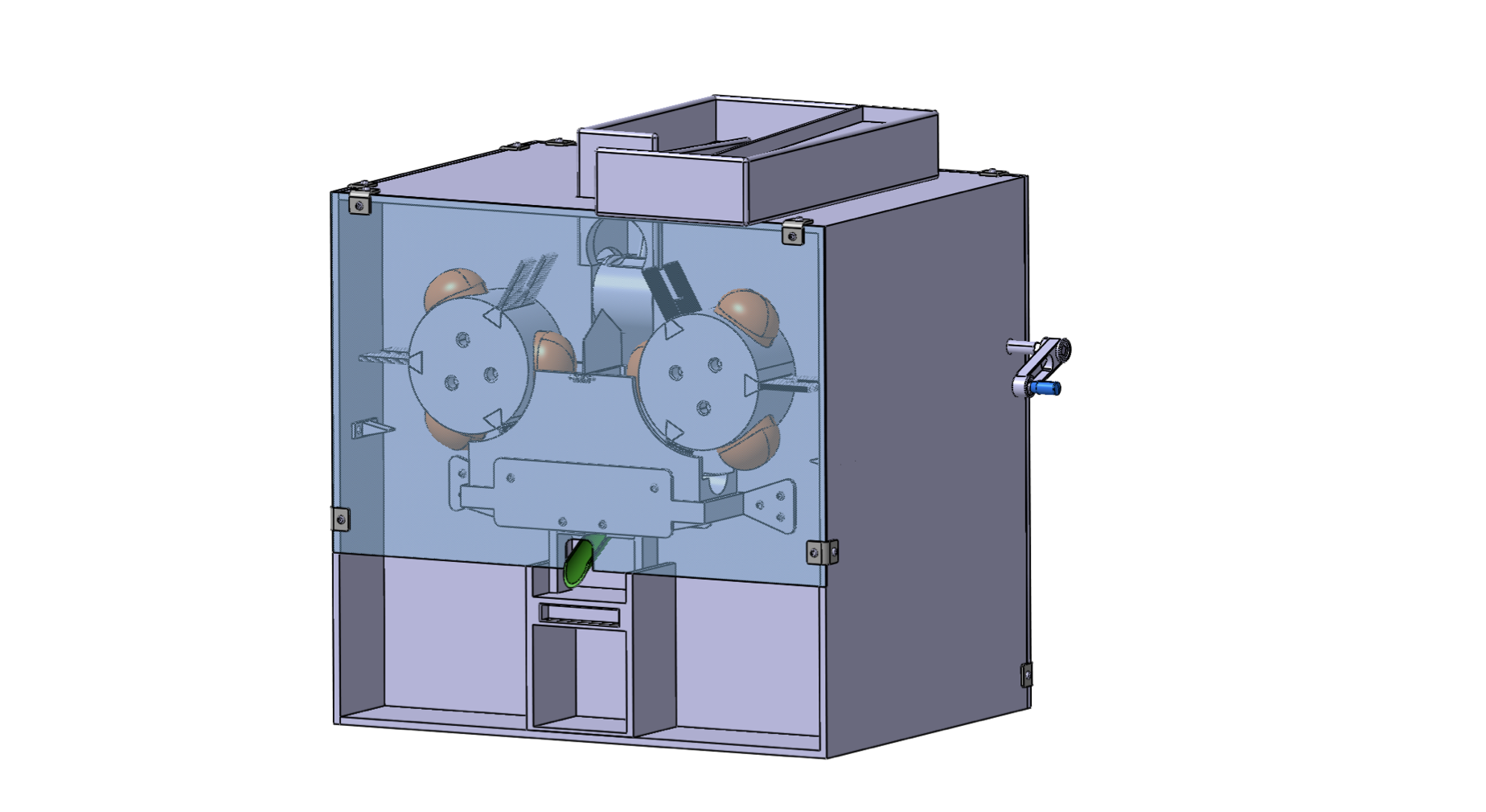
Design decisions were driven by measured loads. The forces to cut (about 60 N) and to press (about 200 N) an orange were determined experimentally on a scale, and a single 10 cm crank has to supply both. A synchronous belt-and-gear train converts the crank input into the two output motions: a compound gear reduction reaching roughly 67.5 N·m at the large pressing wheels (about 519 N of usable force at their 13 cm radius) and 22.5 N·m on the cutting shaft, with one deliberate direction reversal so the triangular blade turns the right way while the crank turns clockwise.
Every shaft and gear was checked against strength: shafts in 304 stainless steel (practical shear strength about 102.5 MPa) sized so the most-loaded shaft's torsional stress stays at 88.42 MPa, and polypropylene housings verified against contact pressure (≈1.69 MPa under the cutting load) while keeping the machine light, corrosion-resistant and recyclable. The report also analyses jamming risks (pulp clogging, peel stalling the wheels) and their fixes.